Starting or growing a business often requires financial support, and choosing the right type of loan can make a significant difference. Two of the most common financing options available to businesses in India are MSME loans and business loans. While these terms are sometimes used interchangeably, they are not exactly the same.
Understanding the difference between MSME loan and business loan in India can help business owners choose the financing option that best suits their needs. Whether you run a small manufacturing unit, a retail store, a service business, or a growing startup, knowing how these loans differ in terms of eligibility, purpose, documentation, and benefits can make the borrowing process easier.
In this guide, we'll explain both loan types, compare their features, and explore how SIDBI supports MSME loans for small businesses across the country.
What Is an MSME Loan?
An MSME loan is a financial product specifically designed to meet the needs of Micro, Small and Medium Enterprises (MSMEs). These businesses play a vital role in India's economy by creating employment, encouraging innovation, and contributing to exports and industrial growth.
MSME financing helps businesses access the funds they need to manage operations, purchase equipment, expand production, invest in technology, or meet working capital requirements. Financial institutions, including SIDBI, provide various financing solutions aimed at supporting the growth of this important sector.
Meaning and Purpose of an MSME Loan
The primary purpose of an MSME loan is to provide businesses with timely access to capital for business development. These loans are structured to address the financial requirements of enterprises at different stages of growth, helping them improve productivity, strengthen operations, and remain competitive.
Who Can Apply for an MSME Loan?
Businesses that fall under the Government of India's MSME classification are generally eligible to apply for MSME loans. This includes eligible micro, small, and medium enterprises engaged in manufacturing or service activities. Lenders typically assess factors such as business performance, financial records, and applicable eligibility criteria before approving a loan.
Common Business Requirements Covered Under MSME Loans
MSME loans can be used for a variety of business needs, including expanding production capacity, purchasing machinery or equipment, upgrading technology, managing working capital, improving infrastructure, and supporting day-to-day business operations.
What Is a Business Loan?
A business loan is a broader financing option available to businesses across different sectors and sizes. Unlike MSME loans, which are specifically intended for enterprises classified as MSMEs, business loans are designed for a wide range of borrowers, including startups, traders, service providers, and established companies.
The purpose of a business loan is to provide financial assistance for various business-related expenses depending on the borrower's requirements and the lender's policies.
Definition and Purpose of a Business Loan
Business loans help businesses obtain funds for operational expenses, expansion, equipment purchases, inventory, marketing activities, or other commercial purposes. The exact usage depends on the business's financial needs and the terms of the loan.
Types of Businesses That Can Apply for Business Loans
Business loans are available to different types of enterprises, including sole proprietorships, partnership firms, private limited companies, limited liability partnerships (LLPs), startups, traders, manufacturers, and service-based businesses. MSMEs may also apply for business loans if they meet the lender's eligibility criteria.
Common Uses of Business Loans
Businesses commonly use these loans for working capital, expanding operations, purchasing assets, increasing inventory, opening new branches, hiring employees, or meeting short-term financial requirements.
MSME Loan vs Business Loan: Key Differences Explained
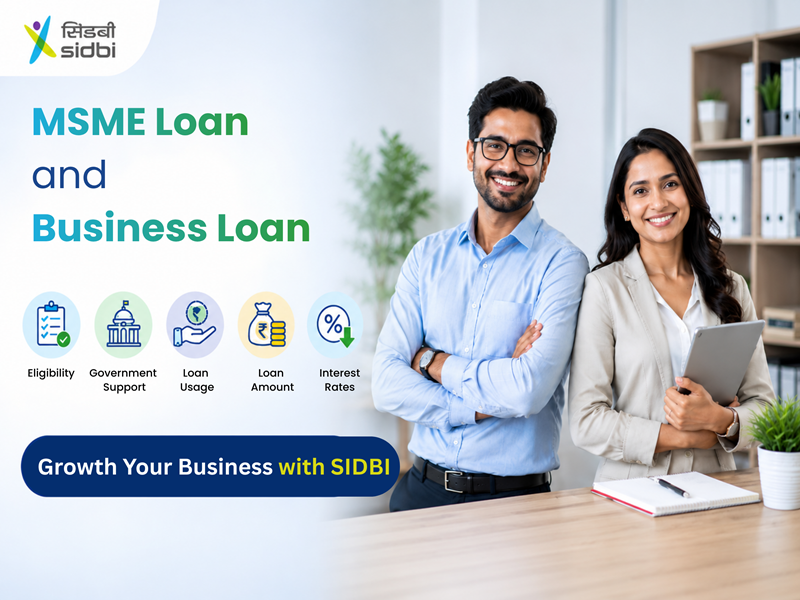
Although both loan types provide financial support for businesses, they differ in several important aspects.
| Feature | MSME Loan | Business Loan |
|---|---|---|
| Purpose | Designed specifically to meet MSME financing needs | Provides general business financing support |
| Target Borrowers | Micro, small, and medium enterprises | Businesses of different sizes and types |
| Eligibility | Usually linked with MSME classification and eligibility criteria | Based on business profile, financial history, and lender requirements |
| Loan Usage | Business expansion, machinery purchase, working capital, and operational needs | Various business-related expenses and growth requirements |
| Government Support | May be connected with government schemes and MSME initiatives | Usually offered as a general lending product |
| Documentation | May require MSME-related documents such as Udyam Registration | Requires business and financial documents as per lender guidelines |
| Loan Amount | Depends on MSME requirements and lender policies | Depends on business profile, repayment capacity, and lender criteria |
| Interest Rates | May offer specialised MSME-focused rates | Interest rates vary depending on lender and borrower profile |
Eligibility Criteria for MSME Loan and Business Loan
Eligibility requirements vary depending on the lender and the type of financing being sought. However, certain common factors are generally considered.
MSME Loan Eligibility Requirements
To apply for an MSME loan, businesses are generally expected to meet the applicable MSME classification criteria. Many lenders may also require Udyam Registration as part of the application process. Business vintage, financial performance, repayment capacity, and credit profile are commonly evaluated before loan approval.
Business Loan Eligibility Requirements
Business loan eligibility is usually based on factors such as the age of the business, annual turnover, credit score, financial stability, repayment ability, and income-related documents. Each lender may have its own assessment process and eligibility requirements.
Documents Required for MSME Loan vs Business Loan
Having the necessary documents ready can help make the loan application process smoother. While document requirements vary between lenders, the following are commonly requested.
Documents Required for MSME Loans
Applicants may generally need to provide identity proof, address proof, business registration documents, Udyam Registration certificate (where applicable), bank statements, income tax returns, and financial statements.
Documents Required for Business Loans
Business loan applications typically require KYC documents, business proof, bank statements, GST returns, income documents, and, in some cases, a business plan depending on the lender's requirements.
Benefits of Choosing an MSME Loan
An MSME loan offers several advantages for businesses that qualify under the MSME category.
1. Designed Specifically for Small and Medium Businesses
MSME loans are structured keeping the financial needs of small and medium enterprises in mind. They provide funding solutions aligned with the operational and growth requirements of these businesses.
2. Helps Businesses Manage Working Capital
Maintaining sufficient working capital is essential for smooth business operations. MSME financing helps businesses manage daily expenses, inventory, supplier payments, and operational costs more effectively.
3. Supports Business Expansion and Growth
Businesses can use MSME loans to expand production capacity, purchase machinery, upgrade technology, or enter new markets, enabling long-term growth.
4. Access to MSME-Focused Government Initiatives
Certain MSME financing options may be linked with government initiatives that promote easier access to credit and encourage the growth of small businesses.
Benefits of Choosing a Business Loan
Business loans also provide valuable financial support for entrepreneurs across different industries.
1. Flexible Usage of Funds
One of the biggest business loan benefits is flexibility. Businesses can use the funds for a wide range of operational and growth-related requirements, subject to the lender's terms.
2. Suitable for Different Business Types
Business loans are available to startups, established companies, traders, manufacturers, service providers, and many other business entities, making them a versatile financing option.
3. Helps Fund Expansion Opportunities
Businesses looking to open new locations, increase production, purchase equipment, or invest in new opportunities can use business loans to support expansion plans.
4. Provides Financial Support During Cash Flow Challenges
Unexpected expenses or temporary cash flow gaps can affect business operations. Business loans can help businesses maintain continuity during such periods.
How SIDBI Supports MSME Financing in India
The Small Industries Development Bank of India (SIDBI) plays a significant role in strengthening the MSME ecosystem by supporting the growth and development of micro, small, and medium enterprises.
SIDBI offers financial assistance to eligible MSMEs through a range of financing solutions aimed at promoting business growth, improving competitiveness, supporting technology upgrades, encouraging innovation, and expanding access to credit. In addition to direct assistance, SIDBI works with financial institutions to improve the availability of finance for MSMEs across the country.
Through its continued focus on strengthening the MSME sector, SIDBI contributes to entrepreneurship, employment generation, and inclusive economic development in India.
Conclusion: Choosing the Right Loan for Your Business Growth
Choosing between an MSME loan and business loan depends on your business's size, eligibility, financial goals, and funding requirements. MSME loans are designed specifically to support the growth and development of eligible micro, small, and medium enterprises, while business loans offer flexible financing for a wider range of businesses.
Understanding the differences between these financing options allows business owners to make informed decisions that align with their long-term objectives. For eligible enterprises seeking reliable MSME business financing, SIDBI continues to play an important role by supporting businesses through financing solutions that contribute to sustainable growth and strengthen India's MSME sector.
Frequently Asked Questions About MSME Loans and Business Loans
1. What is the main difference between an MSME loan and a business loan?
An MSME loan is specifically designed for businesses classified as micro, small, or medium enterprises, whereas a business loan is a broader financing option available to different types of businesses.
2. Is an MSME loan better than a business loan?
The better option depends on your business type, eligibility, and financial requirements. Businesses that qualify as MSMEs may benefit from financing options specifically designed for their sector.
3. Can an MSME apply for a business loan?
Yes. An MSME can apply for a business loan if it meets the lender's eligibility criteria.
4. Are MSME loans available without collateral?
Some MSME financing options may be available without collateral, depending on the lender's policies and applicable schemes.
5. Which loan is better for business expansion?
Both MSME loans and business loans can support expansion. The right choice depends on your business classification, financing needs, and lender requirements.
6. Does Udyam Registration help in getting MSME loans?
Udyam Registration is often an important requirement for businesses seeking MSME-specific financing and helps establish MSME status where applicable.