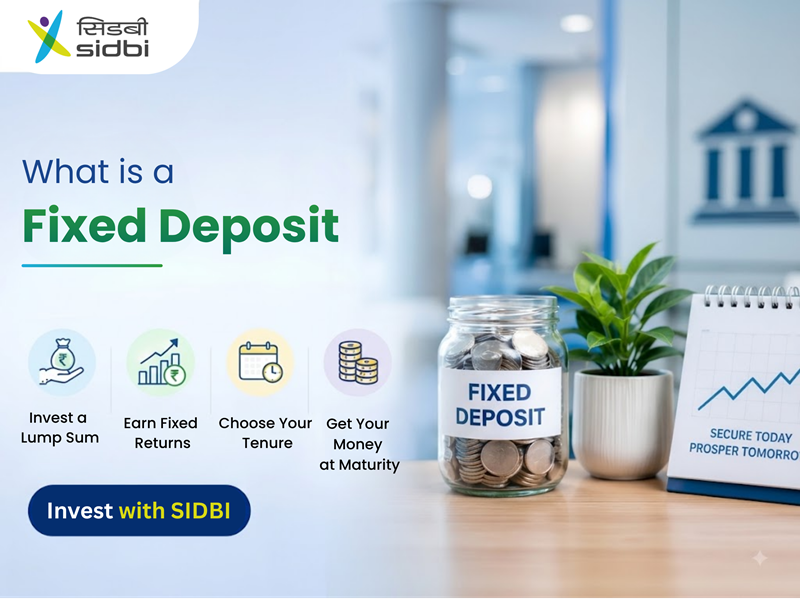
A Fixed Deposit is an investment instrument where an individual deposits a lump sum amount with a bank or financial institution for a fixed period at a predetermined interest rate. At maturity, the investor receives the principal amount along with the applicable interest.
Saving money is an important part of financial planning, but simply keeping money idle may not help it grow over time. Investing in suitable financial instruments allows individuals to earn returns on their savings while working towards short-term and long-term financial goals.
Among the various investment options available, a Fixed Deposit (FD) has remained one of the most widely preferred choices for investors seeking stability, predictable returns, and a disciplined approach to saving.
The SIDBI Fixed Deposit Scheme provides investors with an opportunity to invest surplus funds for a fixed tenure while earning defined returns. The scheme offers investment tenures ranging from 12 to 60 months and is backed by a CARE AAA(FD) rating, indicating the highest degree of safety regarding the timely payment of principal and interest. Investors can also benefit from features such as broad eligibility, nomination facilities, direct credit of interest through ECS wherever available, and additional interest for eligible senior citizens.
What is a Fixed Deposit?
A Fixed Deposit, commonly known as an FD, is a financial investment instrument that enables individuals and eligible entities to invest a lump sum amount for a specified duration in exchange for fixed returns. Unlike investments where returns may fluctuate depending on market conditions, an FD offers an agreed interest rate at the time of investment, providing greater certainty regarding the maturity value.
For example, suppose an investor deposits ?1,00,000 for three years at a fixed interest rate. During the investment period, the deposited amount earns interest according to the applicable scheme terms. Upon completion of the tenure, the investor receives the maturity amount comprising the principal along with the interest earned during the investment period.
How Does a Fixed Deposit Work?
A Fixed Deposit follows a straightforward investment process that begins with selecting an investment amount and ends with receiving the maturity proceeds or periodic interest, depending on the deposit option chosen. Understanding each step helps investors make informed decisions while selecting an FD that best suits their financial objectives.
Selecting the Deposit Amount
The first step is deciding how much money to invest. Investors choose a lump sum amount based on their available surplus funds and financial planning requirements. The minimum deposit amount may vary depending on the financial institution and the applicable scheme. Before investing, it is advisable to review the scheme terms to understand the minimum investment requirements and other applicable conditions.
Choosing the Investment Tenure
After deciding the investment amount, the next step is selecting an appropriate tenure. Fixed Deposits generally offer flexibility by allowing investors to choose from short-term, medium-term, and long-term investment periods.
A short-term Fixed Deposit may be suitable for individuals who expect to use their funds in the near future while still earning returns during the investment period. A medium-term Fixed Deposit can help investors balance accessibility and return expectations, whereas a long-term Fixed Deposit may be considered by those planning for future financial goals over a longer horizon.
Under the SIDBI Fixed Deposit Scheme, deposits are accepted for tenures ranging from 12 months to 60 months, in multiples of one month, providing flexibility for different investment requirements.
Earning Interest on Deposits
Once the Fixed Deposit is opened, the deposited amount begins earning interest at the applicable rate under the selected scheme. Since the interest rate is predetermined, investors know the applicable rate before making the investment, which provides greater clarity while planning expected returns.
Depending on the scheme, interest may be calculated using a specified compounding frequency or may be paid periodically under non-cumulative deposit options. The SIDBI Fixed Deposit Scheme offers effective annual yields based on quarterly compounding, allowing investors to benefit from compounding during the investment tenure.
Why Do People Invest in Fixed Deposits?
Fixed Deposits continue to be one of the most preferred investment options for individuals and organisations seeking stability and predictable returns. Since the investment is made for a predetermined period at a fixed interest rate, investors can estimate their returns in advance and plan their finances with greater confidence. Whether the objective is preserving capital, earning regular income, or setting aside funds for future needs, Fixed Deposits can support a wide range of financial goals.
1. Predictable Returns
One of the primary reasons people invest in Fixed Deposits is the certainty of returns. The applicable interest rate is known at the time of making the investment, allowing investors to estimate the maturity value or periodic interest payments based on the selected deposit option. This predictability makes financial planning easier, as investors can align their investments with anticipated expenses such as education, home purchases, business requirements, or retirement planning.
2. Lower Risk Compared to Market-Linked Investments
Fixed Deposits are often chosen by investors looking for relatively stable investment options because their returns are not directly linked to movements in the stock market or other market-driven instruments. While market-linked investments may experience fluctuations in value, Fixed Deposits offer a predetermined interest rate for the selected tenure, helping investors plan with greater certainty.
3. Helps Build Financial Discipline
Investing in a Fixed Deposit encourages disciplined saving by setting aside funds for a fixed period. Since the investment is intended to remain for the chosen tenure, it can help individuals stay committed to their financial plans rather than spending the money on short-term or unnecessary expenses.
4. Suitable for Different Types of Investors
One of the reasons Fixed Deposits remain popular is their suitability for a diverse range of investors. Beginners who are new to investing often consider Fixed Deposits because of their straightforward structure and predictable returns. Retired individuals may use them as part of their financial planning to manage savings and generate periodic income where applicable.
What are the Different Types of Fixed Deposits?
Financial institutions may offer different types of Fixed Deposits to cater to varying investment requirements. The choice of deposit type generally depends on whether an investor wishes to accumulate wealth over time or receive periodic interest payouts.
1. Cumulative Fixed Deposit
In a cumulative Fixed Deposit, the interest earned during the investment tenure is accumulated instead of being paid out at regular intervals. The accumulated interest is added according to the applicable scheme terms, and the investor receives the principal amount together with the accumulated interest upon maturity.
This type of Fixed Deposit is generally considered by investors who do not require regular income during the investment period and prefer allowing the investment to grow until maturity. It may be suitable for long-term financial objectives where the accumulated maturity amount is intended to meet a future financial need.
2. Non-Cumulative Fixed Deposit
A non-cumulative Fixed Deposit provides interest payouts at predetermined intervals instead of accumulating the interest until maturity. Depending on the scheme offered by the financial institution, investors may have options such as monthly, quarterly, half-yearly, or yearly interest payments.
This type of deposit may be suitable for individuals who require a regular flow of income during the investment period while keeping the principal amount invested until maturity. The choice of payout frequency depends on the options available under the applicable scheme and the investor’s financial requirements.
3. Corporate Fixed Deposits
Corporate Fixed Deposits are offered by companies and financial institutions to eligible investors. Before investing in such deposits, investors should carefully review the credibility of the issuer, understand the applicable terms and conditions, and consider the credit ratings assigned by recognised rating agencies.
Credit ratings can provide an indication of the issuer’s ability to meet its financial obligations. For example, the SIDBI Fixed Deposit Scheme carries a CARE AAA(FD) rating, indicating the highest degree of safety with regard to the timely payment of principal and interest.
Benefits of Investing in Fixed Deposits
Fixed Deposits offer several advantages that make them a preferred investment option for individuals and organisations seeking stability, predictable returns, and flexible investment choices. While every investor’s financial objectives are different, the features of Fixed Deposits can support both short-term and long-term financial planning.
Capital Protection and Stability
One of the key benefits of a Fixed Deposit is that it helps investors preserve their invested capital while earning returns according to the applicable interest rate and scheme terms. Since the returns are predetermined, investors have greater certainty regarding the expected outcome of their investment compared with instruments whose values may fluctuate due to market movements.
Flexible Investment Tenures
Fixed Deposits generally offer flexibility by allowing investors to choose an investment tenure that aligns with their financial goals. Whether the objective is saving for a short-term expense or planning for future financial commitments, investors can select a tenure that suits their requirements.
Easy Investment Process
Opening a Fixed Deposit is generally a straightforward process. Investors are typically required to complete an application form, provide the necessary documents, and fulfil the applicable Know Your Customer (KYC) requirements. Once the application is processed and the deposit is accepted, the investment is created according to the selected tenure and applicable scheme terms.
Useful for Financial Planning
Fixed Deposits can play an important role in financial planning by helping investors set aside funds for specific future requirements. Depending on individual objectives, an FD may be considered while planning for an emergency fund, retirement, short-term financial goals, or anticipated future expenses.
Factors to Consider Before Investing in a Fixed Deposit
Before investing in a Fixed Deposit, investors should evaluate key factors such as interest rates, safety, tenure, and tax implications to ensure the investment aligns with their financial goals.
1. Interest Rate Offered
The interest rate determines the returns earned on a Fixed Deposit. Comparing rates, effective annual yields, and compounding frequency can help investors select a suitable option. Under the SIDBI Fixed Deposit Scheme, interest rates vary based on deposit amount and tenure. Deposits are available from 12 to 60 months, with quarterly compounding and an additional 50 basis points (bps) interest benefit for eligible senior citizens.
2. Safety and Credit Rating
The credibility and credit rating of the institution are important factors when choosing a Fixed Deposit. A higher rating indicates better financial stability and repayment reliability. The SIDBI Fixed Deposit Scheme is rated CARE AAA(FD), reflecting the highest level of safety for timely repayment of principal and interest.
3. Tenure Selection
Choosing the right tenure helps maintain a balance between returns and liquidity. Investors should select a period based on their financial needs and investment goals. The SIDBI Fixed Deposit Scheme offers flexible tenures from 12 to 60 months in multiples of one month, allowing investors to choose a suitable duration.
4. Tax Implications
Investors should understand the tax treatment of Fixed Deposit interest, including applicable TDS provisions, before investing. Under the SIDBI Fixed Deposit Scheme, TDS exemption for income up to ?10,000 is available as per applicable provisions. Considering tax implications can help investors plan their finances effectively.
How to Invest in SIDBI Fixed Deposit?
Investing in the SIDBI Fixed Deposit Scheme involves a straightforward process. Before making an investment, applicants should carefully review the scheme details, understand the applicable terms, and complete the required documentation.
Step 1: Check SIDBI Fixed Deposit Scheme Details
The first step is to review the SIDBI Fixed Deposit Scheme and understand its key features. Investors should check the available investment tenures, applicable interest rates, eligibility criteria, and other investment terms before selecting a suitable deposit option.
SIDBI offers Fixed Deposit tenures ranging from 12 to 60 months, with deposits accepted in multiples of one month. The scheme also provides features such as nomination facility for eligible individual deposits, direct credit of interest through ECS wherever available and requested, broad depositor eligibility, and additional interest for eligible senior citizens.
Step 2: Choose Deposit Amount and Tenure
After reviewing the scheme details, investors should decide the amount they wish to invest and select an appropriate investment tenure. The chosen tenure should reflect individual financial goals, expected liquidity requirements, and investment planning objectives.
Choosing a suitable tenure helps ensure that the investment matures when the funds are expected to be required.
Step 3: Complete the SIDBI Fixed Deposit Application Process
Applicants should complete the SIDBI Fixed Deposit application form by providing the required personal and financial information. SIDBI offers both online and offline application options, enabling eligible depositors to choose the application method that is most convenient for them.
Before submission, applicants should verify that all information provided is accurate and complete in accordance with the scheme requirements.
Step 4: Submit Required Documents
Applicants are required to submit the necessary documents as part of the application process. Commonly required documents include:
- PAN Card
- Identity proof
- Address proof
- Bank account details
- KYC documents
The exact documentation requirements may vary depending on the category of the depositor and the applicable scheme guidelines.
Step 5: Receive Fixed Deposit Confirmation
After the application has been processed successfully and the deposit has been accepted, investors receive confirmation of their Fixed Deposit. Interest payments are made according to the selected payout option and the applicable scheme terms. Upon maturity, the deposit is redeemed in accordance with the chosen deposit option and the prevailing scheme conditions.
Conclusion: Building Financial Security Through Fixed Deposits
Fixed Deposits offer stability, predictable returns, and flexible tenures, making them suitable for individuals, beginners, and businesses seeking secure investment options. The SIDBI Fixed Deposit Scheme provides tenures from 12 to 60 months, CARE AAA(FD) safety rating, nomination facilities, ECS-based interest credit where applicable, and additional interest benefits for eligible senior citizens.
Before investing, investors should consider tenure, interest rates, safety, and financial goals to make Fixed Deposits an effective part of their long-term financial planning.
Frequently Asked Questions About Fixed Deposits
1. What is a Fixed Deposit in simple words?
A Fixed Deposit is an investment where a person deposits a lump sum amount with a bank or financial institution for a fixed period at a predetermined interest rate. At the end of the tenure, the investor receives the principal amount along with the applicable interest.
2. Is Fixed Deposit a safe investment?
Fixed Deposits are generally preferred by investors seeking stable and predictable returns. Before investing, it is important to evaluate the financial strength and credit rating of the institution offering the deposit.
3. How does Fixed Deposit interest work?
Interest on a Fixed Deposit is calculated according to the applicable interest rate, investment tenure, and the terms of the selected scheme. Depending on the deposit option, interest may either accumulate until maturity or be paid periodically.
4. Can I withdraw money from Fixed Deposit before maturity?
The availability of premature withdrawal depends on the terms and conditions of the Fixed Deposit scheme offered by the financial institution. Investors should review the applicable scheme guidelines before investing.
5. Who should invest in Fixed Deposits?
Fixed Deposits may be suitable for beginners, retired individuals, conservative investors, and businesses managing surplus funds who are seeking predictable returns and a structured savings approach.
6. What documents are required to open an FD?
Commonly required documents include a PAN Card, identity proof, address proof, bank account details, and KYC documents. The exact requirements may vary depending on the depositor category and the applicable scheme.


